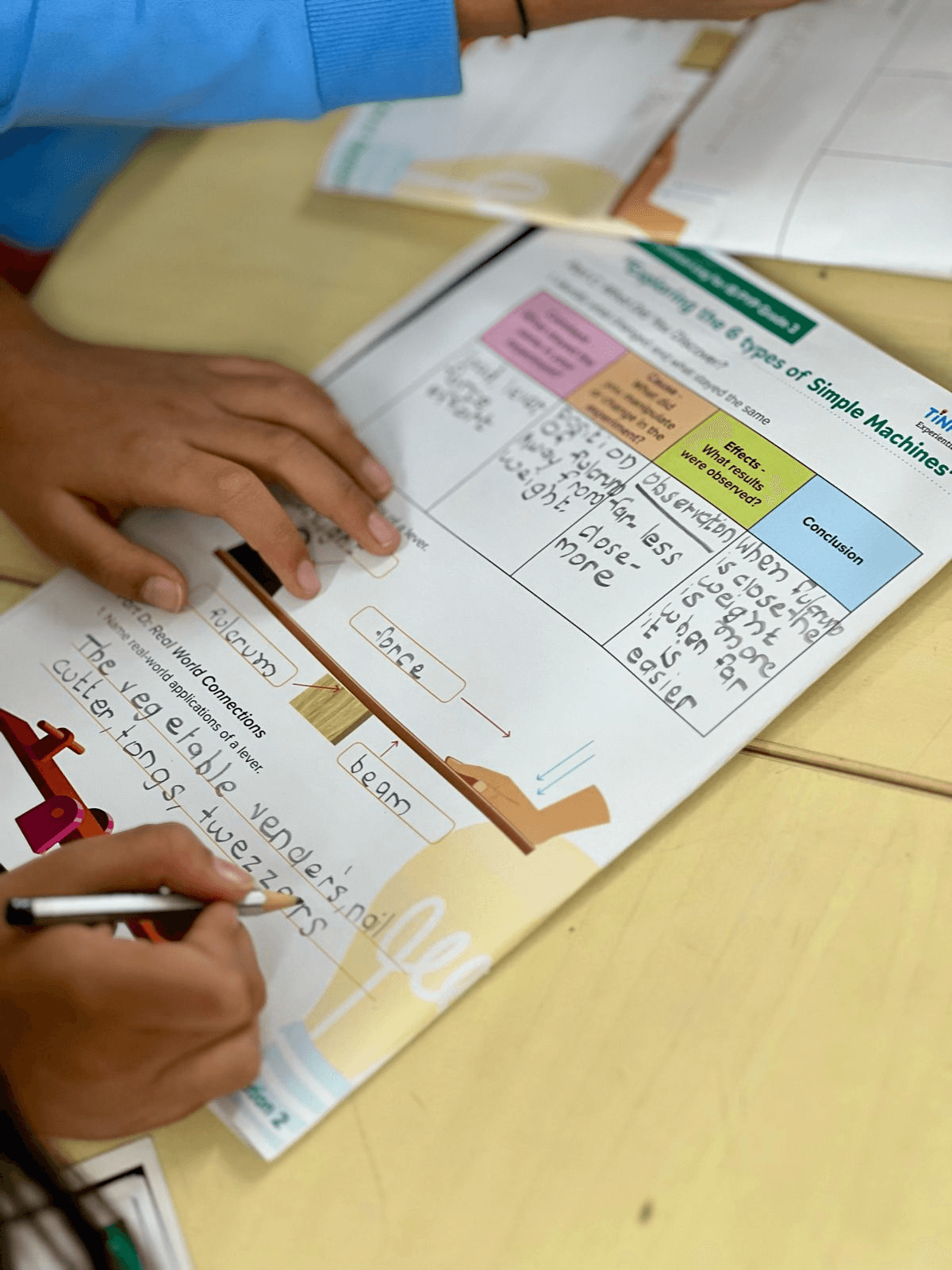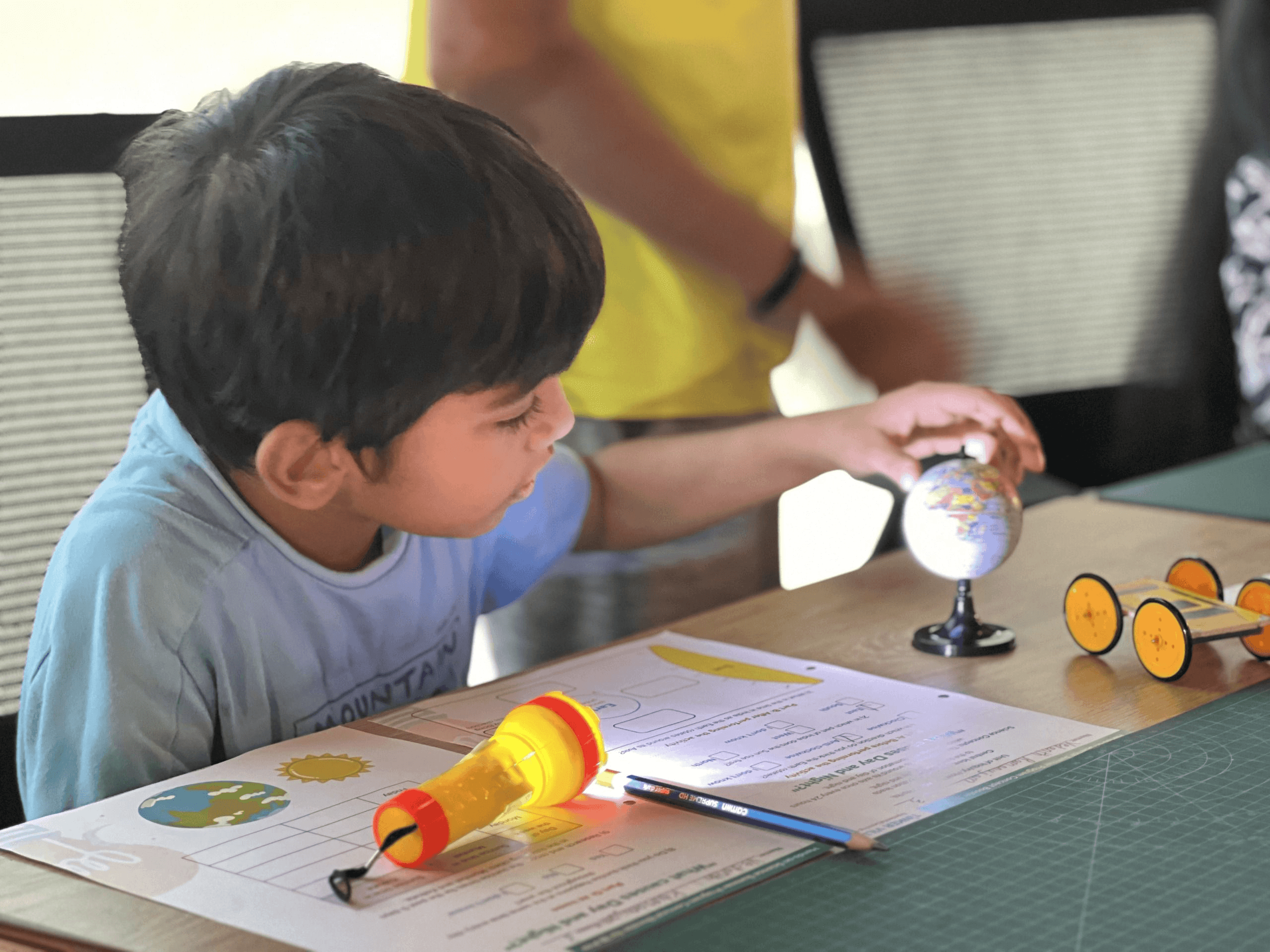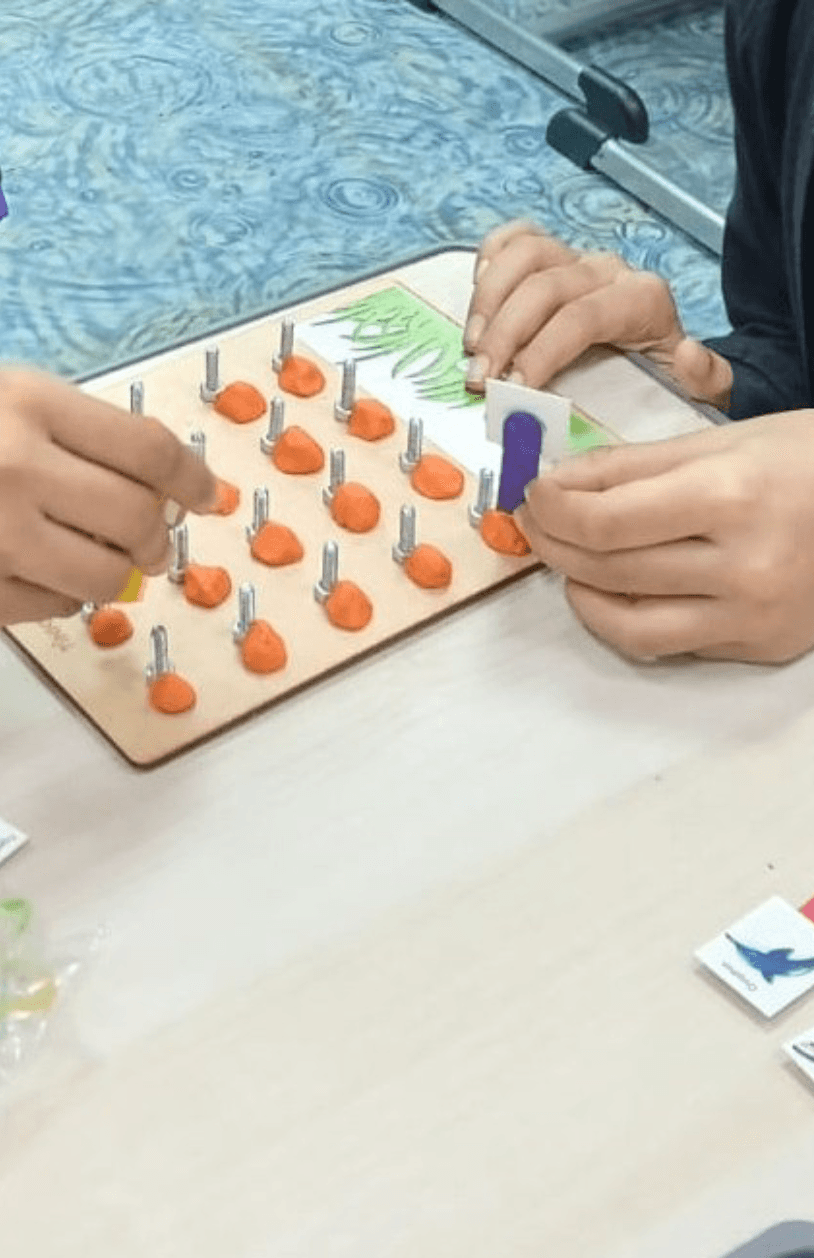






I admire Tinker Village for a very important reason: its emphasis on experiential, hands-on learning. Rather than simply memorising concepts, learners are encouraged to build, create, experiment, and discover. This approach not only helps them understand concepts more effectively but also enables them to come up with innovative, out-of-the-box ideas. Most importantly, it helps them fall in love with the process of learning itself.
Learning how to construct and use my own protractor was one such experience.
The protractor consisted of a transparent circular disc with markings on it and a circular base that acted as the measuring instrument. What fascinated me most was that, unlike the conventional protractor that most of us are familiar with, which is semicircular in shape, this one was a complete circle.
As always, I began the activity by answering a few questions that tested my prior understanding of angles. One question, in particular, stood out: What angles are formed when a circular sheet of paper is folded repeatedly? To explore this, I used a circular sheet of paper and carefully observed the angle formed after each fold.
This was followed by the activity of constructing my own protractor and using it in a rather unique way. Instead of measuring angles drawn on paper, I measured my position relative to various objects and locations around the office—the angle between where I stood and a colleague’s chair, the door, the kitchen, and other familiar landmarks. Then there was a series of questions that encouraged me to think more deeply about the concept.
This concept taught me not just about making a protractor and determining angles, it also taught me another very important lesson, something which should be kept in mind not just by the learners, but by the teachers and parents as well. Bearing this lesson in mind made the learning process smoother for me.
Like most activities at Tinker Village, this one was both engaging and enjoyable. Of course, I faced a few difficulties along the way, but my colleague was more than happy to help.
What struck me was not just the help I received, but the manner in which it was offered. She explained the activity calmly and patiently, creating an environment where I felt comfortable asking questions whenever I was unsure.
I asked questions because I genuinely wanted to understand the activity and perform it correctly. In hindsight, I believe that this willingness to ask questions is one of the most important habits a learner can develop.
Many learners hesitate to ask questions because they fear appearing uninformed or asking something that others might consider obvious. But there is no such thing as a silly question. Asking a question, however simple it may seem, is far better than remaining confused and struggling silently.
This activity taught me the importance of curiosity, one of the most valuable qualities a learner can possess..
When learners ask questions, they reveal a genuine desire to understand the concept being taught. Such learners often grasp ideas more effectively.
Curiosity also helps develop logical reasoning skills. By questioning, analysing, and seeking clarification, learners train themselves to think critically.
When students become genuinely interested in understanding a concept, learning becomes meaningful. Marks and performance often improve as a natural consequence.
No question is too small, too obvious, or too silly. So, when in doubt, ask it out.